
How to Combine Accident and Health Insurance: A Solution to Fit All Clients
- Health Insurance Trends
- Insurance Solutions Trends
- Personal Accident Insurance Trends
- Understanding Consumers
Estimated Reading Time: 4m

Getty Images
Today, consumers want health insurance tailored to their specific needs. Preventative care. Assurance that certain illnesses are thoroughly covered. Ample coverage for both routine and unexpected medical expenses.
In Latin America and the Caribbean, such demand is growing—and with your PALIG portfolio, you’re well positioned to meet it.
PALIG health plans offer competitive benefits on a standalone basis. But when you combine them with thoughtfully selected accident coverage, you can raise the bar even higher.
Quick Answer: Combining health and accident insurance allows agents to create more personalized protection for clients by addressing both medical expenses and broader financial risks. By understanding a client's specific needs, agents can use complementary coverages such as accident, critical illness, or cancer plans to strengthen overall protection while increasing client satisfaction and loyalty.
With combined health and accident benefits, you can offer clients customized protection, in one convenient, cost‑effective transaction. Here’s how.
Combining Coverages: Getting Down to Basics
Combining coverages may sound complicated but it really comes down to knowing two essential things well:
- Each product in your PALIG portfolio, and
- Each client’s specific situation and needs
Chances are, you already know your available health insurance products inside and out. Ideally, you know your accident offerings equally well. In many markets, PALIG 's accident line includes more than traditional ‑type benefits—it includes critical illness and often cancer plans, too.
That’s key. Because as you talk to clients about what they really envision in their perfect health plan, you’ll surface more specific needs—needs that often can be met by some type of PALIG accident coverage.
The Key to Crafting Customized Combo Plans
The more fully you understand each client’s health, family and lifestyle priorities, the better you can design combined health and accident benefits that fit them to a T.
Not only can you recommend a health plan that best meets each client’s specific risks—from plan design to coverages—, but you can also suggest complementary accident coverage.
For example, one family depends on a single breadwinner who needs more protection. In this case, a solid personal accident plan makes a lot of sense.
Another family worries about a history of cancer. In this case, a critical illness or cancer policy complementing that health plan could offer great peace of mind.
In both cases, coverage is personalized. Most accident plans are quite affordable, so for just a little bit more, clients can greatly enhance their coverage.
Providing Bigger Benefits and a Broader Spectrum of Care
While some consumers still choose a minimalist approach to health insurance, more are leaning to benefits that complement their health insurance.
With combined health and accident benefits, they get that more extensive protection, ranging from preventative care services like vaccines and cancer screenings…to doctor visits and hospitalizations…to additional benefits for accident‑related losses or critical illness.
Here’s one good way to introduce the combo concept to clients:
- Health insurance covers specific incurred medical expenses and is usually paid directly to providers
- Accident insurance, including critical illness and cancer plans, is paid as a lump‑sum directly to insureds or someone designated by the insured.
It’s important to emphasize that accident benefits can be used many ways, such as:
- To cover unpaid medical expenses, like deductibles and co‑pays
- To pay for extra help at home
- To fund whatever the family needs or chooses.
For those seeking comprehensive health insurance, this is a compelling story to tell.
5 Ways to Position Accident and Health Insurance Combos
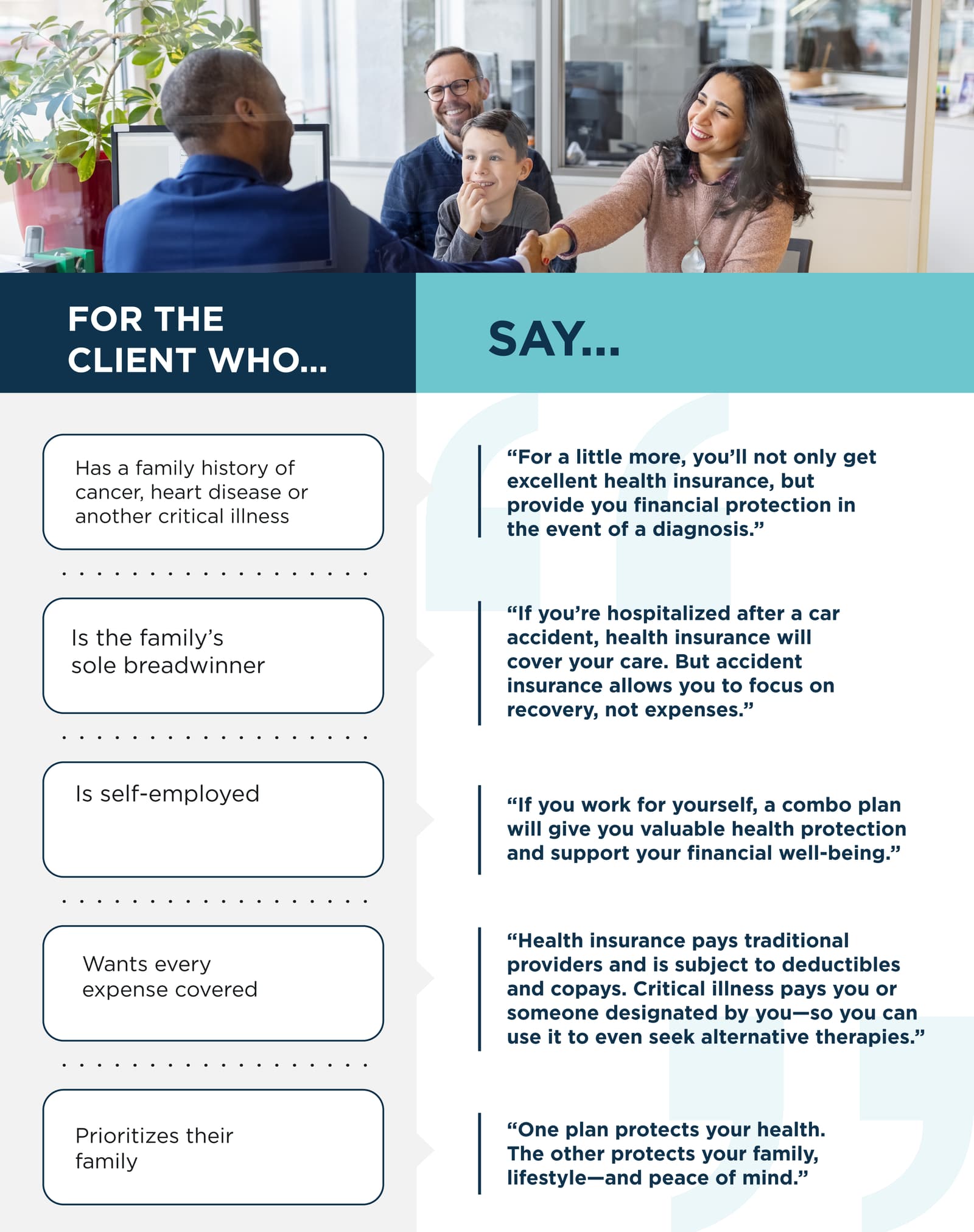
There are nearly as many ways to explain combo plans as there are to design them. Once you know your client’s needs and situation, you’ll know how to best position the combo concept.
Consider these five common client situations and ways to position combined health and accident coverage effectively.
Combo Policies Benefit Agents, Too
Combo policies benefit agents and brokers, too. The more thoroughly you can meet your clients’ insurance needs, the happier they’ll be. Combo clients tend to be more loyal. They’re less likely to cancel their policies or move their business.
In addition, by offering clients multiple products, you help keep competitors at bay, while enhancing overall revenue.
Of course, combo selling works beautifully with life insurance, too. You can learn more about that here.
Have questions about combo selling in your market? . We’re here for you.